Solution
More Than 20 Professional Technicians Service for You
Central air conditioning design is a systematic engineering project that requires comprehensively considering building functions, environmental requirements, energy efficiency, and economic feasibility. Its core objective is to provide suitable temperature, humidity, airflow, and air quality for indoor spaces.
Traditional central air conditioning systems consist of three parts: a cold/heat source room that produces chilled and hot water through chiller units, boilers, or heat exchangers; a chilled water system that delivers cooling and heating energy to indoor spaces through terminal air conditioning equipment; and a cooling water system that discharges condensation heat to the outside atmosphere through a cooling tower.
I. Load Calculation and Air Volume Determination
Design begins with accurate calculation of the building's required cooling, heating, and humidity loads, which is the fundamental basis for system selection and design. Based on this, the supply air volume required to meet temperature and humidity control, as well as the fresh air volume to be introduced from the outside, are determined.
The fresh air volume needs to take into account factors such as exhaust air volume, the air volume required to maintain indoor positive pressure, and the air volume required for hygiene, to ensure healthy, clean, and stable indoor air pressure.
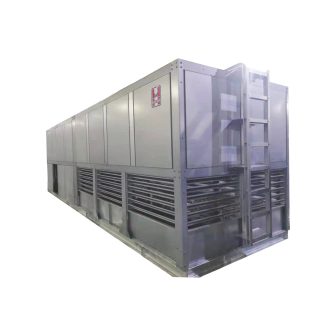
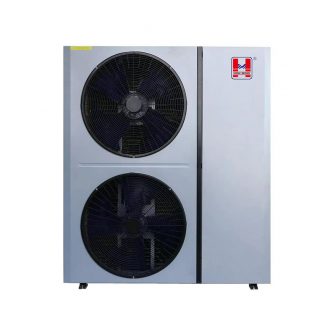
II. Air Conditioning Equipment Selection Based on the load and air volume calculations, select the following key equipment: Air conditioning main units, such as chillers and heat pumps, serve as the system's heating and cooling source and are selected based on the system's heating and cooling load calculations.
Power distribution equipment, such as water pumps and fans, drive the circulation of chilled water, cooling water, and room air to deliver heating and cooling. Selection is based on the water flow rate, air volume, and piping system resistance corresponding to their respective loads.
Terminal processing equipment includes air coolers, heaters, humidifiers, and air filters in air conditioning units, responsible for specific temperature, humidity, and purification treatments of the air. The selection of equipment is based on factors such as load and airflow.
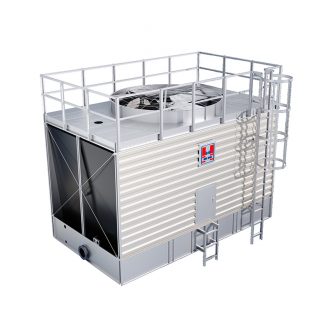
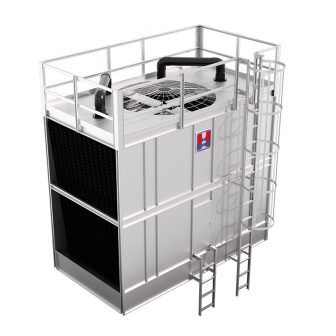
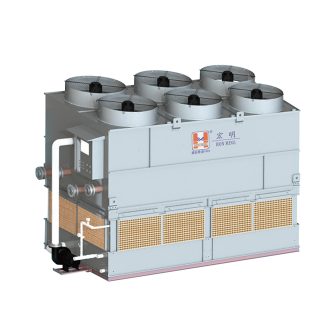
Cooling towers in cooling water systems are used to remove heat from the system (condensation heat from the chiller unit). The selection of towers is based on the chiller unit's heat removal capacity and the corresponding water flow rate.
III. Air Conditioning Water System Design
The air conditioning water system includes chilled water and cooling water. Its design includes:
1. Water Flow Determination: Calculating the required water flow rate based on the heating and cooling loads.
2. Piping Installation: Designing the routing and connection methods for chilled water and cooling water pipes.
3. Hydraulic Calculation: Calculating the resistance of the water piping system to provide a basis for selecting the circulating water pump.
4. Insulation Calculation: Designing insulation for the water pipes and their components to prevent cooling and heat loss as well as condensation.
IV. Air Conditioning System Design (Air Delivery and Distribution) How is the processed air from the air conditioning system delivered and distributed to various spaces?
1. Duct Layout: Rationally plan the routing and spatial layout of supply air, return air, and fresh air ducts.
2. Air Outlet Design: Select appropriate supply and return air outlet types and locations to ensure uniform and comfortable airflow.
3. Hydraulic Calculation: Perform resistance calculations for the duct system to match the fan static pressure and ensure adequate airflow.
V. Noise Reduction and Vibration Damping Measures Specific controls are implemented to address potential noise and vibration generated during system operation:
1. Air System: Noise reduction measures are primarily implemented for the supply and return air fans and ductwork to prevent noise transmission through the air.
2. Water System: Vibration reduction and sound insulation measures are primarily implemented for the circulating water pumps and water pipes to prevent solid-borne sound and vibration transmission.
VI. Computer Room Configuration and Automation Design
1. Computer Room Configuration Design: Rationally arrange the location, spacing, and foundations of large equipment such as chiller/heat source units, water pumps, and cooling towers to ensure sufficient space for installation, operation, and maintenance.
2. Air Conditioning Automation Design: Design an automatic control system to monitor and automatically adjust temperature, humidity, pressure difference, and equipment start/stop, ensuring stable and efficient system operation.
VII. Deliverables and Cost Estimate
1. Drawings and Specifications: Integrate all the above design content to form complete construction drawings (floor plans, system diagrams, detailed drawings, etc.) and design specifications to guide construction and equipment procurement.
2. Project Cost Estimate: Based on the final design scheme, prepare a detailed equipment and material list as well as a project preliminary budget and budget estimate.
VIII. Conclusion Central air conditioning design is a step-by-step, interconnected process. Starting with basic load calculations, it sequentially completes equipment selection, air/water distribution system design, noise and vibration control, and machine room and automation design, ultimately resulting in constructable drawings and cost estimates. This ensures the system meets comfort and health requirements while achieving safe, energy-efficient, and economical operation.